
CAPABILITIES
Custom Zinc Machining Service
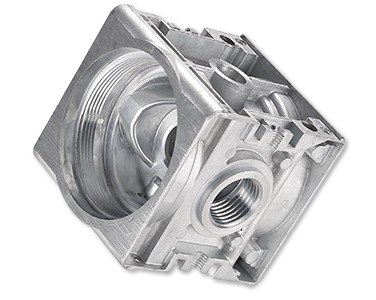
Whether you seek swift prototyping or mass production, our Zinc Machining capabilities extend to handling intricate designs and delivering reliable, top-quality service.
- Tolerances down to ±0.0002″ (0.005mm)
- Rapid Prototype and low-volume Zinc parts
- 3, 4 & 5-axis CNC machining





All uploads are secure and confidential.
Precision Parts. Endless Possibilities.
Explore our custom manufacturing capabilities through real product examples.
















Zinc Machining Capabilities
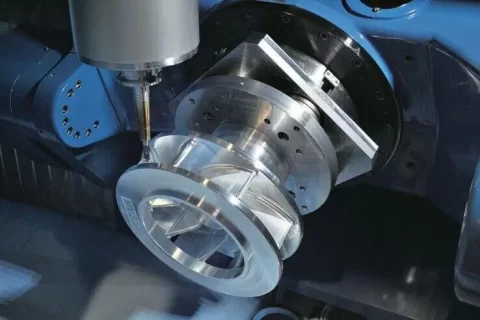
Our zinc CNC machining services use 3, 4, and 5-axis CNC machines to produce precise zinc parts with tolerances as low as ±0.005mm.
We handle complex designs, offer both rapid prototypes and large-scale volumes, and work with zinc alloys such as Zamak 2, Zamak 3, and Zamak 5.
Post-processing methods such as grinding, bead blasting, media tumbling, powder coating, laser engraving, and electroplating are available for customized surface properties.
Our Zinc Machining Service
Zinc is the fourth most used metal in manufacturing after iron, aluminum, and copper. Due to its rust-prevention properties, steel and other metals use zinc alloys as a galvanizing medium.
However, there is extensive use of zinc beyond a protective layer on secondary substrates. Various industries use CNC machining of zinc for industrial components and products.
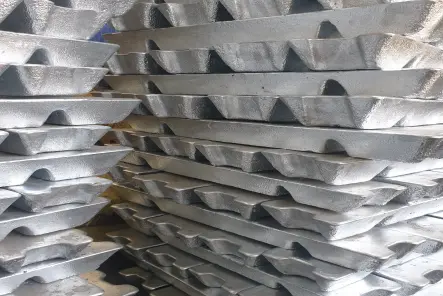
- Three Types of Alloys
We offer three main zinc alloy variations: Zamak 2, Zamak 3, and Zamak 5, used in CNC machining. Each has unique properties, allowing for customized part production. ProleanTech provides CNC machining services for these zinc alloys based on your specific requirements.
- Diverse Machining Operations
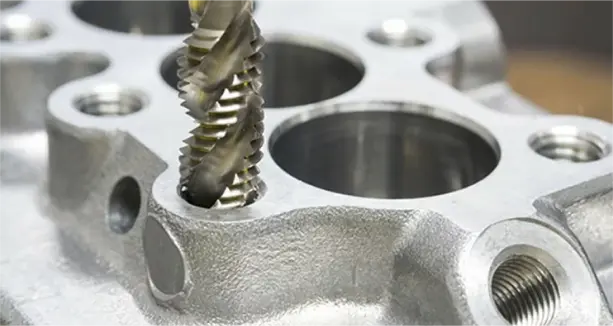
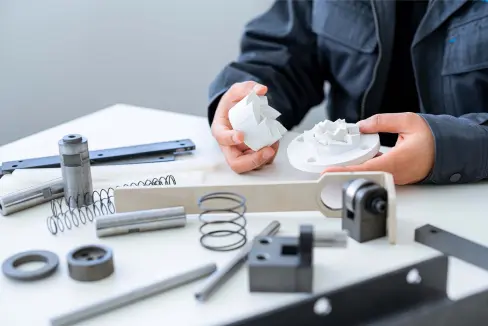
Our CNC machines are capable of milling, turning, drilling, reaming, tapping, and other machining processes to handle complex and intricate designs. Additionally, our engineers build custom tooling for complex and unique projects.
- Parts with Intricate Features
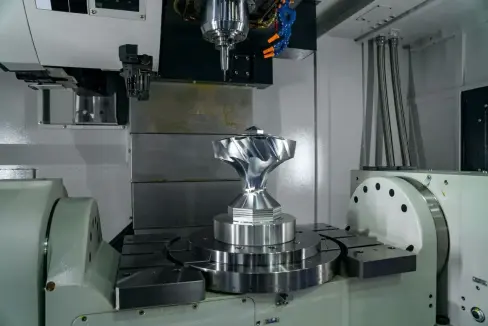
CNC 5-axis machining at our factory can create parts with features like thin walls, free-form surfaces, small gaps, curved profiles, intricate undercuts, internal passages, complex joints, etc.
- Rapid Production
Our machining automation with CNC minimizes the production cycle time significantly and can run 24/7. At the same time, a real-time monitoring system allows us to adjust the process immediately for optimal results.
- Excellent Repeatability
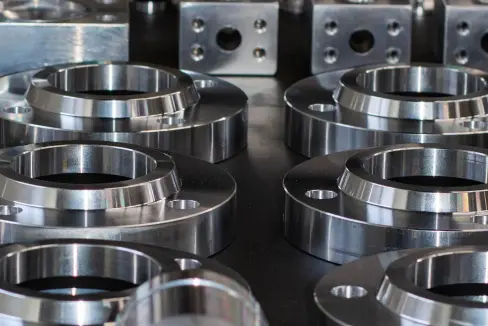
Prolean’s precise computer control allows for consistent tool paths throughout the machining batches and tool wear is monitored and compensated for strict tolerances. This enables the production of zinc parts with excellent repeatability, ensuring consistent quality across machining batches.
Zinc Machining Properties
| Part Size Limitation | 1,625.6 X 812.8 X 965.2 (64″ x 32″ x 38″) |
| Wall Thickness | 0.794 mm |
| Linear and Radial Tolerance | ± 0.01 mm and ±1° |
| Lead Time | As fast as 3 days |
| Strengths | Corrosion resistance, machinability, dimensional accuracy, and repeatability. |
| Weakness | Brittleness, low melting point, and chip control |
Industry Application
Automotive Industry
Zinc is used in automotive CNC machining to create corrosion-resistant and durable components like brackets, mounts, carburetor bodies, and fuel system parts.
Electronics
CNC-machined zinc parts can provide excellent electromagnetic shielding and impact resistance, which makes it a suitable option for electronics housing, enclosures, and connector casings. Meanwhile, CNC operations can create detailed heat sinks for electronic thermal management.
Manufacturing industry
CNC-machined zinc components for industrial equipment are high-strength and wear-resistant. It can be used to create gears, valve bodies, tooling fixtures, Levers and actuators, etc.
Structure and architecture
The structural and architectural industry utilizes zinc CNC machining for durable components like facade panels, lighting fixtures, roofing parts, decorative hardware, etc.
Other Industries
Zinc alloy machining is also used in other several applications, including medical device housing, components for surgical instruments, Locks and security hardware, etc.
Materials for Zinc Machining
Our CNC machining services use three main zinc alloys: Zamak 2, Zamak 3, and Zamak 5. These alloys have varying proportions of zinc, aluminum, magnesium, and copper, affecting their mechanical properties and suitability for different tasks. They are chosen for low friction, durability, machinability, and cost competitiveness.
| Tensile Strength | Shear Strength | Impact strength | Hardness | Elongation | Thermal conductivity |
| 360 MPa | 317 Mpa | 47 J | 100 HB | 7 % in 51mm | 105 W/mK |
| Tensile Strength | Shear Strength | Impact strength | Hardness | Elongation | Thermal conductivity |
| 252 MPa | 227Mpa | 7.4 J | 82 HB | 3 % in 51mm | 113 W/mK |
| Tensile Strength | Shear Strength | Impact strength | Hardness | Elongation | Thermal conductivity |
| 328 MPa | 262Mpa | 65. 1 J | 91 HB | 7 % in 51mm | 109 W/mK |
It is made with alloying elements aluminum 3.8 to 4.2 %, copper 2.7 to 3.3 %, magnesium 0.035 to 0.06 %, iron 0.02 %, and minor amounts of other elements like cadmium, tin, lead, etc.
The considerable amount of copper in Zamak 2 makes it a high-hardness and creep-resistant zinc alloy. Machining of Zamak 2 is an excellent choice for industrial equipment components, high-load bearings, electrical hardware, and other heavy-duty applications.
Zamak 3 includes alloying elements 3.8 to 4.2 % of Aluminum, 0.035 to 0.06 % Magnesium, copper 0.03%, 0.02% of iron, and others like lead and nickel in minor amounts.
Zamak 3 offers a good balance of strength, ductility, and corrosion resistance. It is also easy to machine. The common uses of machine zinc parts are automotive parts, medical equipment housing, consumer & sporting goods, etc.
Zamak 5 alloys consist of almost the same composition as Zamak 3 in addition to 1 % copper.
The extra copper amount increases the mechanical strength and hardness. The balance of strength of ductility is useful in applications like brackets and structural supports for automotive, sporting, and fitness equipment parts, musical instruments, industrial machinery components, housing for medical equipment, etc.
Surface Treatment for Zinc Machining
We use different surface treatment processes for zinc machining parts to optimize their surface smoothness and properties according to functional and aesthetic requirements. If your required surface treatment is not listed below, feel free to contact us for more options.
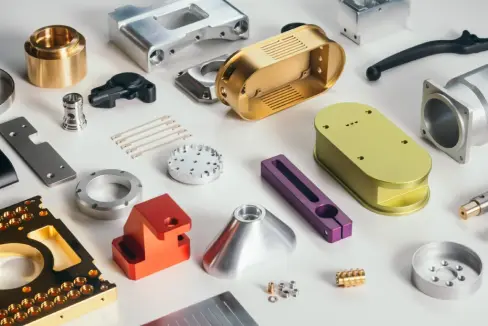
As-machined: The “as-machine” finish may show tool marks and is suitable for zinc components where high-level finishes are unnecessary for performance and aesthetics.
Bead blasting: Bead blasting uses high-pressure glass beads to remove imperfections and create a uniform matte finish on zinc surfaces.
Powder Coating: The powder coat on the zinc surface acts as a protective layer for wear, corrosion, wear, and impact, and can be applied in various colors. It can serve both functional and decorative purposes.
Laser Engrave: It permanently etch designs, text, or patterns onto the zinc surface. Laser engraving can add branding, serial numbers, or intricate designs to zinc parts.
Electroplating: It refers to applying secondary metals on a zinc surface via electrolysis, such as nickel, silver, or gold to acquire the properties of plating.
3 Ways to Ensure Perfection
Standards
GENERAL TOLERANCE
For metals, the standard is ISO-2768 fH (fine)
For plastics, the standard is ISO-2768 mK (medium)
Metric threads tolerances:ISO 965-1 standard UN Threads Tolerances: ASME B1.1-2003 standard
knurling: ISO13444:2012 standard Our factory is ISO 9001:2015 certificated
Visual inspection and Protection
Constant visual inspection conditions
Quantification of cosmetic surface quality
Process requirements
Part cleaning and Protection
Quality Inspection Report
Inspection Confirmation
Dimensional confirmation
Appearance confirmation
Quality documentation
How to Order Parts?
Get a free quote from a real engineer; once we receive your design, our engineer will review it and send you a quote as fast as one hour.

Get an Instant Quote
Upload your design file or email our engineering team directly. You'll get a firm quote in as fast as one hour, no account required.

Start Production
Once you confirm your order, production begins immediately. Track real-time status from cutting through final inspection via your order dashboard.

Receive Your Part
Every part passes quality control before it ships. We pack parts to prevent damage in transit and deliver directly to your address.
We generally evaluate production and provide quotations within one hour. If you need a more urgent quote immediately, please contact us through our official WhatsApp account.
Zinc Machining Parts Gallery
Zinc Part
Zinc Part
Zinc Part
Zinc Part
Latest Blog
Check out our latest blogs, we share industry trends, design tips, and experience earned from manufacturing.
- Electroplating Vs Electro-less plating
- What are the types of surface finishes for CNC machining?
- Common Materials for CNC Machining
- Tolerances in CNC Machining
- Sheet Metal Fabrication: Enclosures for Electronics
- Best Cutting Tools for CNC Machining– Choose the Right
- An Ultimate Guide to CNC Copper Machining
- Production Cycle Time in CNC Machining
- Electroplating Vs Electro-less plating
- What are the types of surface finishes for CNC machining?
- Common Materials for CNC Machining
- Tolerances in CNC Machining
- Sheet Metal Fabrication: Enclosures for Electronics
- Best Cutting Tools for CNC Machining– Choose the Right
- An Ultimate Guide to CNC Copper Machining
- Production Cycle Time in CNC Machining

Die Cast Industry: Status in 2026 and Trends by Segments
Die-casting is a process of creating metal components by forcing molten material into a reusable mold (called a die), where it fills the cavity and takes the shape upon solidification.
Read more →
Electric Discharge Machining Applications Across Industries
Electrical Discharge Machining (EDM) is a non-conventional subtractive manufacturing process, in which a tool (electrode/wire) removes the material from conductive workpieces using controlled electric sparks inside a dielectric medium
Read more →
PEI CNC Machining: Material Grades, Processes, and Considerations
PEI CNC machining converts raw PEI rod, bar, or plate into functional components using cutting, milling, turning, drilling, and other suitable operations using the CAD model & CNC program.
Read more →ZINC MACHINING REVIEW
Define alloy condition, feature support and protective-finish intent
Zinc and zinc-alloy parts require a clear distinction between stock form, cast condition, machined interfaces and any subsequent coating or conversion treatment. Locate functional features from stable datums and protect thin or cosmetic areas in the drawing.
Engineering data to lock before release
| Material state | Specified zinc alloy and starting form |
|---|---|
| Functional geometry | Datums, mating faces and threaded features |
| Finish intent | Conversion, coating or as-machined requirement |
| Inspection scope | Critical dimensions and cosmetic acceptance zones |
Do not use a finish name as a substitute for specifying the substrate, functional dimensions and required test or inspection evidence.
