
MATERIALS
PPSU(Polyphenylene sulfone resins)
PPSU is used in various sectors because of its lightweight, high toughness, great impact resistance, high heat resistance, chemical stability, transparent color, and wide operating temperature range
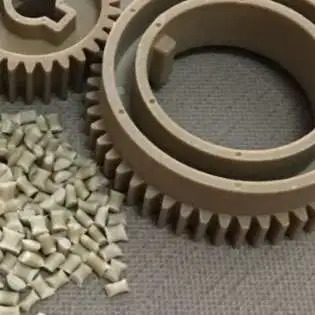
Precision Parts. Endless Possibilities.
Explore our custom manufacturing capabilities through real product examples.
















PPSU(Polyphenylene sulfonic resins) At a Glance
| Process compatibility | Applications | Tolerances | Wall Thickness | Max Part Size | Strengths | Lead Time | Price |
| CNC Mill CNC Lathe |
Accurate Aerospace interior parts, Electronics housing, automotive parts, and medical devices with repeatability. | Not lower than ±0.25 mm (±0.010″), based on the drawing ( ISO 2768) | Minimum 0.03″ (0.80 mm), but this can change depending on theproportion of the wall thickness to the linear dimension. | 200 x 80 x 100 cm | High toughness, impact resistance, heat resistance, chemical stability, and lightweight. | Minimum 3 days. Not more than 10 days; for all complex parts. | $$ |
Introduction to PPSU (Polyphenylene sulfone resins)
Polyphenylene sulfone resins (PPSU) are lightweight thermoplastic with high toughness and impact resistance. It offers various beneficial Physical, mechanical, and chemical properties such as High heat resistance, chemical stability, machinability, transparent color, and an extensive working range of temperature.
PPSU is suitable for manufacturing aerospace interior parts, Electronics housing, automotive parts, medical devices, and many more.
Try Prolean Now!
PPS (Polyphenylene Sulfide) CNC Machining Services
The PPS (Polyphenylene Sulfide) CNC Machining Services encompasses diverse capabilities to leverage the unique properties of PPS in precision manufacturing. As a high-performance thermoplastic, PPS plastic offers exceptional thermal stability, chemical resistance, and dimensional accuracy, making it an ideal candidate for CNC machining. At prolean, Our PPS CNC machining is confined to standard operations for Precision PPS CNC Machining Service and Fast PPS CNC Machining Service options, catering to the needs of different industries.
- Range and Scope: From standard to precision and fast turnaround services.
- Precision CNC Machining for PPS Parts: Ensuring exact tolerances and superior finish.
- High-Quality Machining for PPS Components: Focusing on the durability and precision of PPS.
- PPS Machining for Industrial Applications: Widely used in areas like aerospace, automotive, and electronics for its resilience and stability under harsh conditions.
- Adapting to Client Needs: Customizable services to meet specific industry requirements.
The applications of PPS CNC Machining extend across various sectors, each demanding high precision and quality. Whether it’s Precision CNC Machining for PPS Parts or High-Quality CNC Machining for PPS Components, the focus remains on delivering parts that meet stringent industry standards. Moreover, the use of PPS in machining is particularly significant in several industrial applications due to its robustness and versatility.
Technological Excellence in CNC Machining of PPS Materials
Our Top PPS CNC Machining Expertise uses cutting-edge CNC technologies to machine PPS materials. Our team of expert engineers and mechanists have experience achieving the stringent tolerances required in many high-tech industries. Different Precision PPS CNC Machining Techniques are applied to get such results. Moreover, we have developed Custom PPS CNC Machining Strategies to address the unique requirements of each project, showcasing the flexibility and adaptability of CNC machining in handling PPS materials.
Overall, Our Expert PPS Machining Solutions and Technological Excellence in CNC Machining of PPS Materials reflect a comprehensive approach to PPS machining. This approach encompasses a range of services from Custom PPS Parts Manufacturing to Precision PPS CNC Machining Techniques, all tailored to meet the specific needs of diverse industries.
Ensuring Quality and Cost-Effectiveness in PPS CNC Machining
Quality Assurance in PPS CNC Machining is paramount in delivering products that meet and exceed industry standards. It begins with Maintaining standards in a PPS CNC Machining service company, ensuring every aspect of the process, from material selection to final inspection. The approach is not just about dimensional accuracy but also about ensuring the longevity and performance of the machined parts under various operational conditions.
Cost-Effective Strategies for PPS CNC Machining
We use lean manufacturing principles to reduce the overall PPS CNC Machining Cost. The lean manufacturing approach is ideal for Cost-effective PPS CNC Machining Solutions. It involves optimizing machining processes to enhance efficiency and minimize waste, adopting just-in-time manufacturing, and continuous processes. As a result, it significantly contributes to achieving cost-effectiveness.
Online Platforms and Global Outreach in PPS CNC Machining
The integration of online platforms in the PPS CNC Machining sector has significantly enhanced the accessibility and efficiency of services. Clients can now obtain an Online quote for PPS CNC Machining Service, streamlining the process of initiating projects.
Prolean is the leading Online PPS CNC Machining service provider in this area. We provide a quick and transparent quotation process, accommodating clients’ diverse needs with ease. Moreover, Our Instant Quotes for PPS CNC Machining Services also focuses on customer interactions, allowing for immediate pricing information, and helping in decision-making and project planning for Global PPS CNC Machining services.
Expanding the reach of these services on a global scale, Global Reach in PPS CNC Machining has opened up new opportunities and markets. Therefore, we have a broader client base, ranging from local businesses to international corporations, all seeking Fast PPS CNC Machining Services with high precision and quality.
Latest Blog
Check out our latest blogs, we share industry trends, design tips, and experience earned from manufacturing.
- Electroplating Vs Electro-less plating
- What are the types of surface finishes for CNC machining?
- Common Materials for CNC Machining
- Tolerances in CNC Machining
- Sheet Metal Fabrication: Enclosures for Electronics
- Best Cutting Tools for CNC Machining– Choose the Right
- An Ultimate Guide to CNC Copper Machining
- Production Cycle Time in CNC Machining
- Electroplating Vs Electro-less plating
- What are the types of surface finishes for CNC machining?
- Common Materials for CNC Machining
- Tolerances in CNC Machining
- Sheet Metal Fabrication: Enclosures for Electronics
- Best Cutting Tools for CNC Machining– Choose the Right
- An Ultimate Guide to CNC Copper Machining
- Production Cycle Time in CNC Machining

Die Cast Industry: Status in 2026 and Trends by Segments
Die-casting is a process of creating metal components by forcing molten material into a reusable mold (called a die), where it fills the cavity and takes the shape upon solidification.
Read more →
Electric Discharge Machining Applications Across Industries
Electrical Discharge Machining (EDM) is a non-conventional subtractive manufacturing process, in which a tool (electrode/wire) removes the material from conductive workpieces using controlled electric sparks inside a dielectric medium
Read more →
PEI CNC Machining: Material Grades, Processes, and Considerations
PEI CNC machining converts raw PEI rod, bar, or plate into functional components using cutting, milling, turning, drilling, and other suitable operations using the CAD model & CNC program.
Read more →PPSU MATERIAL DATA
Specify service environment and verification for a high-performance polymer
PPSU parts should be defined around the exact grade, temperature/chemical exposure, cleaning or sterilization cycle where relevant, load-bearing interfaces and the dimensions that must remain functional after conditioning.
Engineering data to lock before release
| Grade identity | Approved PPSU grade, color and stock/moulded state |
|---|---|
| Exposure profile | Temperature, chemical and cleaning-cycle requirement |
| Functional geometry | Interfaces, wall thickness and stress-concentration zones |
| Acceptance evidence | Certificate, dimensions and required functional test |
A high-temperature material does not automatically validate a high-temperature assembly; the part geometry and service cycle must be considered together.
