
Every process we run,
in one place
38 processes documented, three families to navigate them by, and every page linked from here. Pick the family, compare what each process can hold, then open the page before you request a quote.
- 38
- capability pages
- 3
- process families
- +9
- outside the families
- ISO 9001
- SGS audited
Precision Parts. Endless Possibilities.
Explore our custom manufacturing capabilities through real product examples.
















Pick the family, then the process
Almost everything we make starts in one of three places. Each family holds the processes that share a machine, a tolerance band and a way of holding the part.
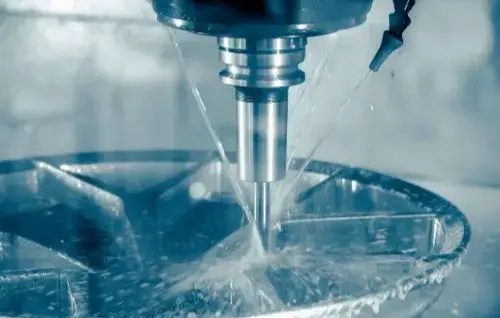 CNC machining
Material removed by a rotating tool. Tight work, thread work, and repeat features — the family most RFQs start in.
Sheet metal & formingFlat stock cut and formed. Enclosures, brackets, chassis, and panels that need to hold a shape, not a tolerance band.
Prototyping & moldingFirst article through production tooling — prints, casts, moulds, and the soft tools you use before committing to steel.
9 more capabilities, grouped by material
Same shop, same enquiry desk. These are coatings, treatments and specific materials rather than a way of removing or forming metal, so they sit outside the families — grouped here by what they work on.
All 38 capabilities
Every process page on the site, grouped the same way as above. Filter by family or search by name to find the page that carries the detail.
38 capabilities
CNC machining
11 processesSheet metal & forming
8 processesPrototyping & molding
10 processesBeyond families
9 processesNo capability matches that filter. Try a shorter term, or ask us directly.
Cut, formed, finished and inspected under one roof
Machining, forming and finishing are not subcontracted out. That is what keeps a tolerance from drifting between steps — and why a revision can be answered the same day it lands.
- 3
- stages — cut, formed, finished
- 1
- quality system across them
- 1 day
- to quote a standard enquiry
Four doors. Pick the one you are standing in.
- 01Quote machining
I need a part cut from solid metal or plastic
Start with CNC machining. Threads, bores and flatness callouts all land here — it is the deepest of the three families.
- 02Quote sheet metal
I need something flat, folded or enclosed
Go to sheet metal & forming. Cutting, bending, stamping and welding sit together because most parts need more than one.
- 03Quote a prototype
I need one part before I need a thousand
Use prototyping & molding for prints, soft tools and vacuum casts, then step up to production tooling once the geometry stops moving.
- 04Talk to an engineer
I am not sure yet
Send the drawing. Routing is our job — one conversation beats reading 38 pages.
Six things buyers ask first
Which process should I pick for my part?
Do you publish tolerances for every process?
How fast can you turn a part around?
Can I combine processes — machining plus anodizing, for instance?
What file types do you accept?
Is my drawing kept confidential?
Send the drawing. We will come back with a process and a price.
You do not need to know which of the 38 processes you need. Send the file and the routing, the tolerance and the turnaround come back together.
- STEP, IGES, SLDPRT, STL, DXF, DWG, PDF — and ZIP if there are several
- NDA available before you upload, not after
- Quoted within one working day on standard machining enquiries
Start an enquiry
Attach the model and the drawing if you have one. A description alone is enough to begin.
Get a quote Talk to an engineerLatest Blog
Check out our latest blogs, we share industry trends, design tips, and experience earned from manufacturing.
- Electroplating Vs Electro-less plating
- What are the types of surface finishes for CNC machining?
- Common Materials for CNC Machining
- Tolerances in CNC Machining
- Sheet Metal Fabrication: Enclosures for Electronics
- Best Cutting Tools for CNC Machining– Choose the Right
- An Ultimate Guide to CNC Copper Machining
- Production Cycle Time in CNC Machining
- Electroplating Vs Electro-less plating
- What are the types of surface finishes for CNC machining?
- Common Materials for CNC Machining
- Tolerances in CNC Machining
- Sheet Metal Fabrication: Enclosures for Electronics
- Best Cutting Tools for CNC Machining– Choose the Right
- An Ultimate Guide to CNC Copper Machining
- Production Cycle Time in CNC Machining

Die Cast Industry: Status in 2026 and Trends by Segments
Die-casting is a process of creating metal components by forcing molten material into a reusable mold (called a die), where it fills the cavity and takes the shape upon solidification.
Read more →
Electric Discharge Machining Applications Across Industries
Electrical Discharge Machining (EDM) is a non-conventional subtractive manufacturing process, in which a tool (electrode/wire) removes the material from conductive workpieces using controlled electric sparks inside a dielectric medium
Read more →
PEI CNC Machining: Material Grades, Processes, and Considerations
PEI CNC machining converts raw PEI rod, bar, or plate into functional components using cutting, milling, turning, drilling, and other suitable operations using the CAD model & CNC program.
Read more →PROCESS SELECTION
Choose the process from the governing feature, not the part label
Parts often combine features better suited to different processes. The first engineering decision is to identify the governing feature: internal geometry, wall thickness, material behavior, tolerance, surface requirement, expected volume, or downstream assembly interface.
Engineering data to lock before release
| Geometry driver | Feature access, internal detail, draft and undercuts |
|---|---|
| Material driver | Alloy/polymer grade, thickness and heat response |
| Accuracy driver | Dimension, datum chain and geometric tolerance |
| Volume driver | Prototype, bridge quantity or repeat production |
Process selection is reviewed against the final drawing; a similar-looking part may need a different route when its control features change.
