
Material Options For Machining
Compare 23 machinable materials on the alloys and subtypes each page actually publishes, the tolerance it holds and the price band — then go straight to the spec data or the comparison that answers your question.
Precision Parts. Endless Possibilities.
Explore our custom manufacturing capabilities through real product examples.
















What is your part actually up against?
Most selection problems are decided by one dominant constraint rather than by a material family. Pick the one that applies and you get the materials that answer it, plus the reading that explains the trade-off.
I need the part lighter
Strength-to-weight ratio decides it. Aluminum carries most of this work, titanium when the load is high, steel only where stiffness must come from section.
It must survive heat and chemicals
Continuous service temperature plus whatever media it touches. Commodity plastics are out; PEEK, PEI, PPS and PTFE are in.
It slides, rubs or takes impact
Friction coefficient, wear rate and impact toughness matter more than raw tensile strength. POM, PA and PC are the usual answers.
It has to insulate or hold dimensions
Dielectric strength, dimensional stability under load and moisture uptake. Glass laminates plus PEI and PVC take this role.
23 materials, side by side
Every column below is taken from the specification table already published on that material’s own page. Nothing here is estimated.
Last extracted 2026-09-20.
Why some rows are empty here. 11 of the 23 pages publish a type column — Alloys on the metals, Subtypes on the plastics. The other 12 publish a single specification with no type breakdown, so the column is empty rather than withheld; ask on the quote and we confirm what is in stock.
All 23 materials
Each page carries the type list where one is published, the achievable tolerance, the minimum wall, the price band for that material and the applications it is normally chosen for.
Metals 7
- Alloy Steel 10 grades High strength and toughness for loaded structural parts
- Aluminum 8 grades Lightweight, corrosion resistant, the default choice for most machined parts
- Brass 3 grades Free machining, good conductivity, takes a decorative finish
- Cast Iron not specified by grade Vibration damping and high compression strength
- Copper 2 grades Best electrical and thermal conductivity of the machinable metals
- Stainless Steel 9 grades Corrosion resistance combined with high mechanical strength
- Titanium 3 grades Highest strength-to-weight ratio, biologically inert
Plastics 14
- ABS not specified by grade Tough, low cost, good impact and abrasion resistance
- Acrylic (PMMA) not specified by grade Optical clarity and rigidity at low cost
- Delrin (POM) 1 subtype Low friction and wear for moving parts
- PTFE (Teflon) not specified by grade Lowest friction, very wide chemical and thermal range
- Nylon (PA) 1 subtype Resilient and fatigue resistant with a good bearing surface
- PEEK 1 subtype Continuous high temperature and chemical resistance
- PMMA (Acrylic) not specified by grade Alternate entry for the same polymer as the Acrylic page
- Polycarbonate (PC) not specified by grade Outstanding impact resistance and toughness
- Polyetherimide (PEI / ULTEM) not specified by grade Thermal stability with electrical insulation
- Polyethylene (PE) 2 subtypes Impact strength, food and pharma compatible
- Polypropylene (PP) not specified by grade Chemical stability and stiffness for fluid handling parts
- PPS (Polyphenylene Sulfide) not specified by grade High temperature rigidity, chemically inert
- PPSU not specified by grade Tough, heat and chemical resistant, sterilizable
- PVC 4 subtypes Stiff, chemical resistant, electrically insulating
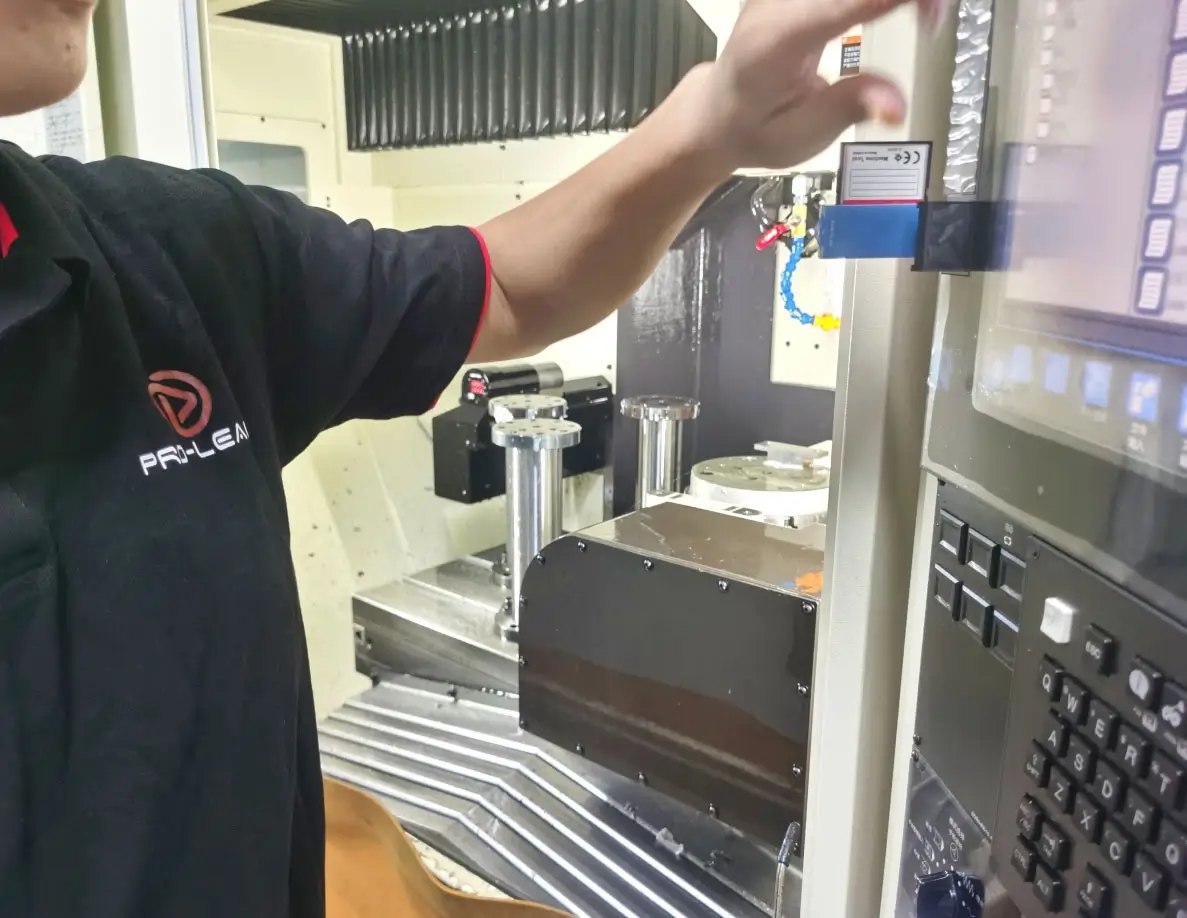
The material you approve is the material that ships
Grade substitution is the most common way a good design fails late. Every incoming lot is matched to its mill certificate before release, and alloy identity is confirmed on the instrument rather than on the paperwork.
Three ways through the material library
If you would rather be told what to read than search for it, pick the line that matches what you already know.
Material first
You already know the family
Property first
You know the requirement, not the material
Process first
The method is fixed, the material is open
What backs the numbers on this page

Mill certificates and traceability
Material ships with its certificate and a traceable heat number. If your drawing calls out AMS, ASTM, EN or ASME, the quote is written against that specification — not against a generic equivalent.
How material certification works →
See our inspection standards →
Tolerance held to ISO 2768 unless stated
Standard tolerance is ISO 2768 m unless the drawing specifies otherwise. Tighten it and the achievable band is quoted per material — the figures in the table above are the published capability of that material.
Read the ISO 2768 guide →Material questions we get most
Are your materials certified?
What if the material I need is not on the list?
How is the material actually verified?
Which is the best metal for CNC machining?
Which is the best plastic for CNC machining?
Do you help with the selection?
Latest Blog
Check out our latest blogs, we share industry trends, design tips, and experience earned from manufacturing.
- Electroplating Vs Electro-less plating
- What are the types of surface finishes for CNC machining?
- Common Materials for CNC Machining
- Tolerances in CNC Machining
- Sheet Metal Fabrication: Enclosures for Electronics
- Best Cutting Tools for CNC Machining– Choose the Right
- An Ultimate Guide to CNC Copper Machining
- Production Cycle Time in CNC Machining
- Electroplating Vs Electro-less plating
- What are the types of surface finishes for CNC machining?
- Common Materials for CNC Machining
- Tolerances in CNC Machining
- Sheet Metal Fabrication: Enclosures for Electronics
- Best Cutting Tools for CNC Machining– Choose the Right
- An Ultimate Guide to CNC Copper Machining
- Production Cycle Time in CNC Machining

Die Cast Industry: Status in 2026 and Trends by Segments
Die-casting is a process of creating metal components by forcing molten material into a reusable mold (called a die), where it fills the cavity and takes the shape upon solidification.
Read more →
Electric Discharge Machining Applications Across Industries
Electrical Discharge Machining (EDM) is a non-conventional subtractive manufacturing process, in which a tool (electrode/wire) removes the material from conductive workpieces using controlled electric sparks inside a dielectric medium
Read more →
PEI CNC Machining: Material Grades, Processes, and Considerations
PEI CNC machining converts raw PEI rod, bar, or plate into functional components using cutting, milling, turning, drilling, and other suitable operations using the CAD model & CNC program.
Read more →MATERIAL SELECTION DATA
Choose the material from the load case, environment and process route
Material selection should connect the part function to measurable data: alloy or polymer grade, condition, strength or stiffness requirement, temperature and chemical environment, stock form, surface treatment and certificate needs.
Engineering data to lock before release
| Performance inputs | Load, stiffness, temperature, wear and environment |
|---|---|
| Material identity | Standard, grade, temper/condition and stock form |
| Manufacturing route | Machining, forming, moulding, casting or additive process |
| Verification | Certificate, test method and critical property requirement |
A material family name is rarely sufficient for procurement; grade and condition should be defined where the design depends on them.
