
Surface Finishing
Heat Treatment Service





All uploads are secure and confidential.
Precision Parts. Endless Possibilities.
Explore our custom manufacturing capabilities through real product examples.
















Heat Treatment
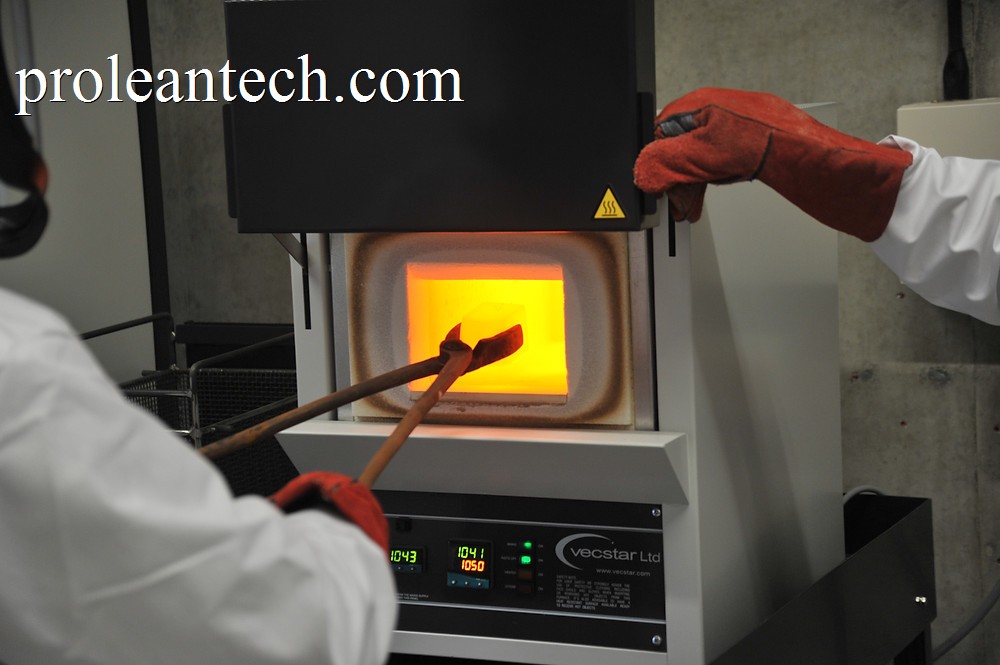
Heat treating of the surface is a range of processes used mainly with steel parts that use heating in various ways for different periods to achieve required surface properties. One of the commonly used heat treatment processes for steel parts is hardening. As the name suggests, hardening results in a hardened surface on the steel part.
In surface hardening, the surface of the steel part is first heated to the transformation temperature of 800℃ or higher and a certain amount of carbon is dissolved into the surface. The part is then cooled down using oil or water while carbon is supersaturated in the part surface. This produces a hardened surface. The surface colour of hardened parts changes to a dull grey.
Prolean offers surface heat treatment for steel parts.
How to Order Parts?
Get a free quote from a real engineer; once we receive your design, our engineer will review it and send you a quote as fast as one hour.

Get an Instant Quote
Upload your design file or email our engineering team directly. You'll get a firm quote in as fast as one hour, no account required.

Start Production
Once you confirm your order, production begins immediately. Track real-time status from cutting through final inspection via your order dashboard.

Receive Your Part
Every part passes quality control before it ships. We pack parts to prevent damage in transit and deliver directly to your address.
We generally evaluate production and provide quotations within one hour. If you need a more urgent quote immediately, please contact us through our official WhatsApp account.
Latest Blog
Check out our latest blogs, we share industry trends, design tips, and experience earned from manufacturing.
- Electroplating Vs Electro-less plating
- What are the types of surface finishes for CNC machining?
- Common Materials for CNC Machining
- Tolerances in CNC Machining
- Sheet Metal Fabrication: Enclosures for Electronics
- Best Cutting Tools for CNC Machining– Choose the Right
- An Ultimate Guide to CNC Copper Machining
- Production Cycle Time in CNC Machining
- Electroplating Vs Electro-less plating
- What are the types of surface finishes for CNC machining?
- Common Materials for CNC Machining
- Tolerances in CNC Machining
- Sheet Metal Fabrication: Enclosures for Electronics
- Best Cutting Tools for CNC Machining– Choose the Right
- An Ultimate Guide to CNC Copper Machining
- Production Cycle Time in CNC Machining

Die Cast Industry: Status in 2026 and Trends by Segments
Die-casting is a process of creating metal components by forcing molten material into a reusable mold (called a die), where it fills the cavity and takes the shape upon solidification.
Read more →
Electric Discharge Machining Applications Across Industries
Electrical Discharge Machining (EDM) is a non-conventional subtractive manufacturing process, in which a tool (electrode/wire) removes the material from conductive workpieces using controlled electric sparks inside a dielectric medium
Read more →
PEI CNC Machining: Material Grades, Processes, and Considerations
PEI CNC machining converts raw PEI rod, bar, or plate into functional components using cutting, milling, turning, drilling, and other suitable operations using the CAD model & CNC program.
Read more →HEAT-TREATMENT DATA
Specify final material state and post-treatment inspection condition
Heat-treatment requirements must identify the material grade, target condition, controlled property, applicable test method and which features are inspected after treatment. Plan for potential change in size, form or surface condition when setting machining allowance.
Engineering data to lock before release
| Material basis | Grade, incoming condition and traceability |
|---|---|
| Treatment target | Required condition, hardness/strength or microstructure |
| Geometry control | Allowance and post-treatment critical dimensions |
| Evidence | Test method, report format and sampling requirement |
Hardness or strength targets should identify the measurement method and location, not only a number without test context.
