
Material Certification Explanation
Precision Parts. Endless Possibilities.
Explore our custom manufacturing capabilities through real product examples.
















The material certifications that we provide to customers come in two types:
Data sheet
The Date sheet is normally issued by a relatively authoritative institution, it defines the material, including both the property data sheet and the composition table, as demonstrated below, this is a sample that we show to our customer
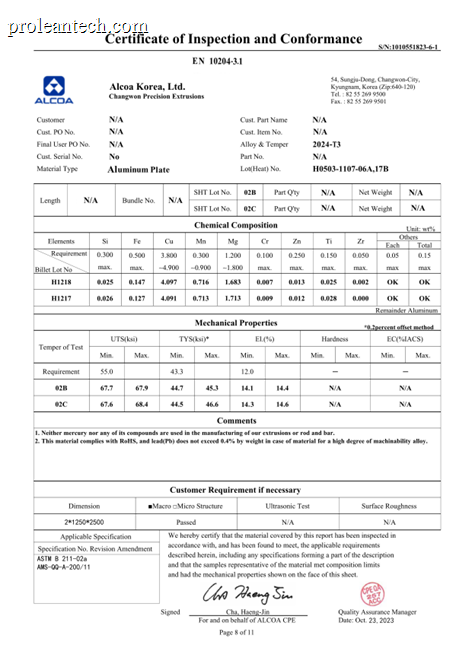
Data Sheet Template
The date sheet consists of three sections, the first section shows basic information about the issue institution, Sample specifications, etc.
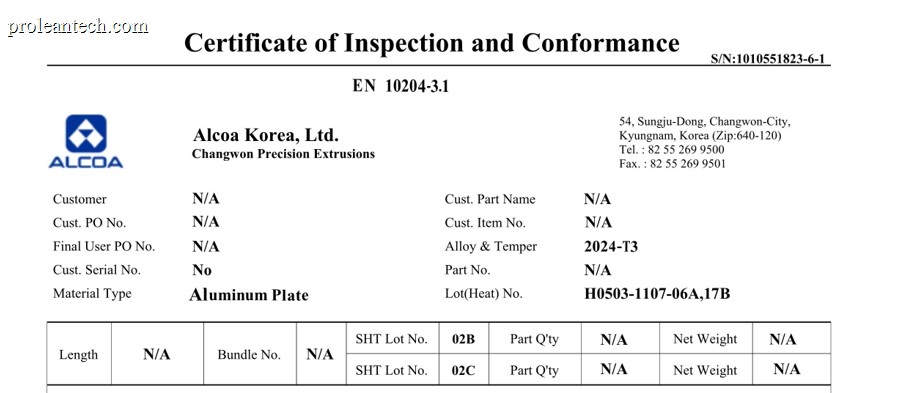
Data Sheet section 1
Section 2 demonstrates the determined chemical composition of the sample, usually using a high-precision spectrometer.
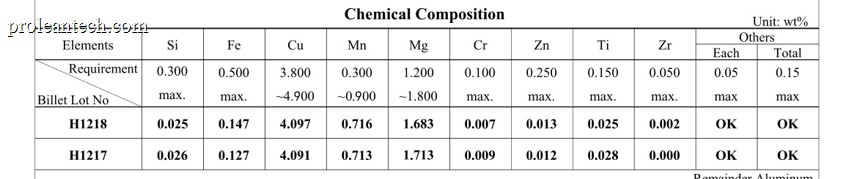
Data Sheet Section 2 Chemical Composition
Section 3 shows the Mechanical Properties of the materials,
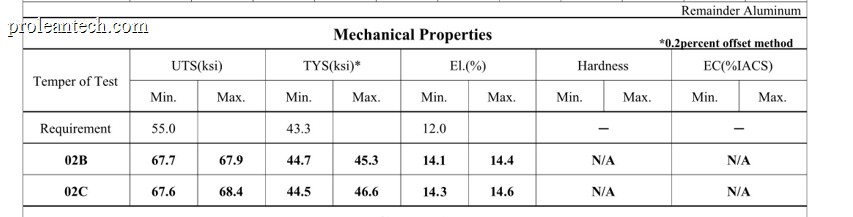
Data Sheet Section 3 Mechanical Properties
Material Certification
The material certification is normally provided by the material supplier, the main difference between material certification and data sheet is the issued party. The results of material certification are provided based on material batches and are not specifically tested on a certain piece of raw material. Generally speaking, there is not much difference between the two in terms of data.
A material certification includes the material’s properties under the supplier’s letterhead and is stamped, or a report printed by a spectrometer.
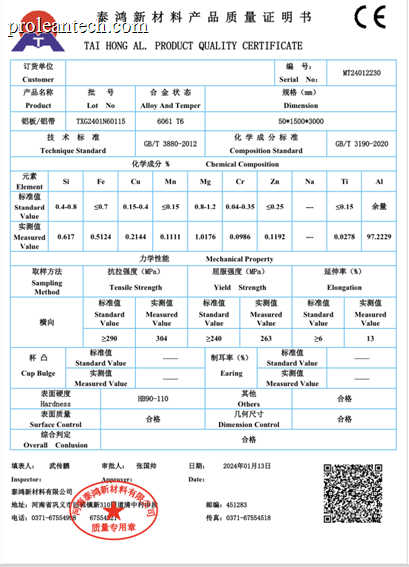
Material Certification
Try Prolean Now!
Latest Blog
Check out our latest blogs, we share industry trends, design tips, and experience earned from manufacturing.
- Electroplating Vs Electro-less plating
- What are the types of surface finishes for CNC machining?
- Common Materials for CNC Machining
- Tolerances in CNC Machining
- Sheet Metal Fabrication: Enclosures for Electronics
- Best Cutting Tools for CNC Machining– Choose the Right
- An Ultimate Guide to CNC Copper Machining
- Production Cycle Time in CNC Machining
- Electroplating Vs Electro-less plating
- What are the types of surface finishes for CNC machining?
- Common Materials for CNC Machining
- Tolerances in CNC Machining
- Sheet Metal Fabrication: Enclosures for Electronics
- Best Cutting Tools for CNC Machining– Choose the Right
- An Ultimate Guide to CNC Copper Machining
- Production Cycle Time in CNC Machining

Die Cast Industry: Status in 2026 and Trends by Segments
Die-casting is a process of creating metal components by forcing molten material into a reusable mold (called a die), where it fills the cavity and takes the shape upon solidification.
Read more →
Electric Discharge Machining Applications Across Industries
Electrical Discharge Machining (EDM) is a non-conventional subtractive manufacturing process, in which a tool (electrode/wire) removes the material from conductive workpieces using controlled electric sparks inside a dielectric medium
Read more →
PEI CNC Machining: Material Grades, Processes, and Considerations
PEI CNC machining converts raw PEI rod, bar, or plate into functional components using cutting, milling, turning, drilling, and other suitable operations using the CAD model & CNC program.
Read more →MATERIAL TRACEABILITY
Match the certificate request to the material decision that matters
A material certificate is valuable when it identifies the supplied heat, grade, condition and reported test values relevant to the design. Specify whether traceability, chemistry, mechanical results, country-of-origin or a particular certificate format is required.
Engineering data to lock before release
| Traceability unit | Heat, lot, batch or incoming-stock identifier |
|---|---|
| Material identity | Standard, grade, temper/condition and form |
| Report data | Chemistry and mechanical properties when required |
| Flow-down | Certificate requirement carried to purchasing and delivery |
Certificate scope must be requested before procurement; a generic statement of material cannot retrospectively prove a specific heat or lot.
