
CAPABILITIES
Plastic Machining Service
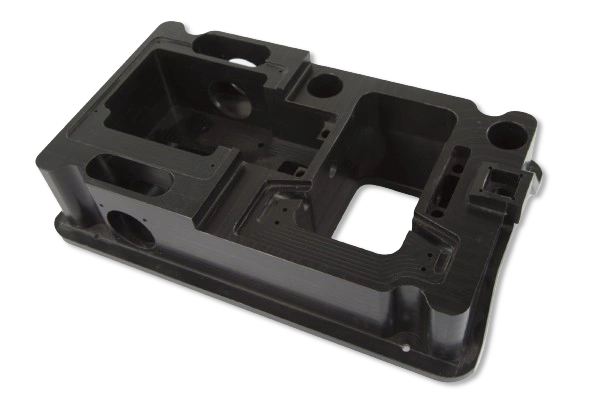
Choose ProleanTech for Complex and precise plastic parts for your project! A reliable CNC plastic machining service for both prototyping and full-scale production at competitive rates.
• Muti-axis CNC lathes and machining equipment
• Tolerances as low as ±0.0002″ (0.005mm)
• Lead time as short as 1 day





All uploads are secure and confidential.
Precision Parts. Endless Possibilities.
Explore our custom manufacturing capabilities through real product examples.
















Plastic Machining Capabilities
- Advantages of CNC Plastic Machining
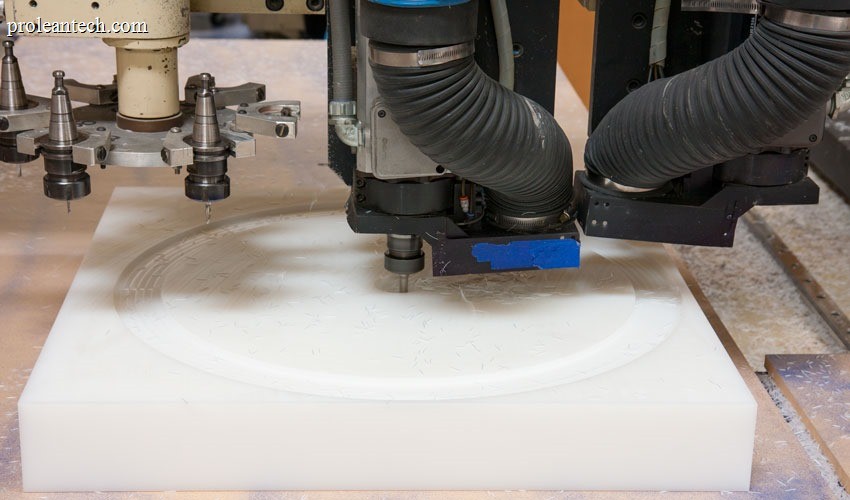
Plastics are lightweight, corrosion-resistant, and often more cost-effective than metals. They offer good electrical insulation and can be colored easily. The softness of plastic reduces the machining cycle time and the tool wear. Meanwhile, machining stability allows for complex and intricate details via milling, turning, drilling, tapping, grooving, and other suitable operations.
- What we do to make Plastic Machining Perfect
Our machining factory has 3, 4, and 5-axis CNC lathes and a machining center that can process various thermoplastics and thermosets with a precision of ±0.005mm. We handle ABS, PC, PE, PMMA, and other plastics based on your requirements. Furthermore, we also have post-processing and finishing facilities to enhance the surface quality according to your application needs.
You can trust our experience in handling any machined plastic components!
Our Plastic Machining Properties
|
Part size limitation |
72″ x 20″ x 6″ |
|
Wall thickness |
0.0315” (0.8 mm) |
|
Linear and radial tolerance |
± 0.01 mm and ±1° |
|
Max. hole diameter |
5.5” |
|
Flaness |
0.01” |
|
Lead time |
As fast as one day |
|
Strengths |
Machinability, Lightweight, dimensional stability, and low cost |
|
Weaknesses |
Susceptible to heat and melting, risk of warping |
CNC Plastic Material Grades
Plastic Machining Finishes
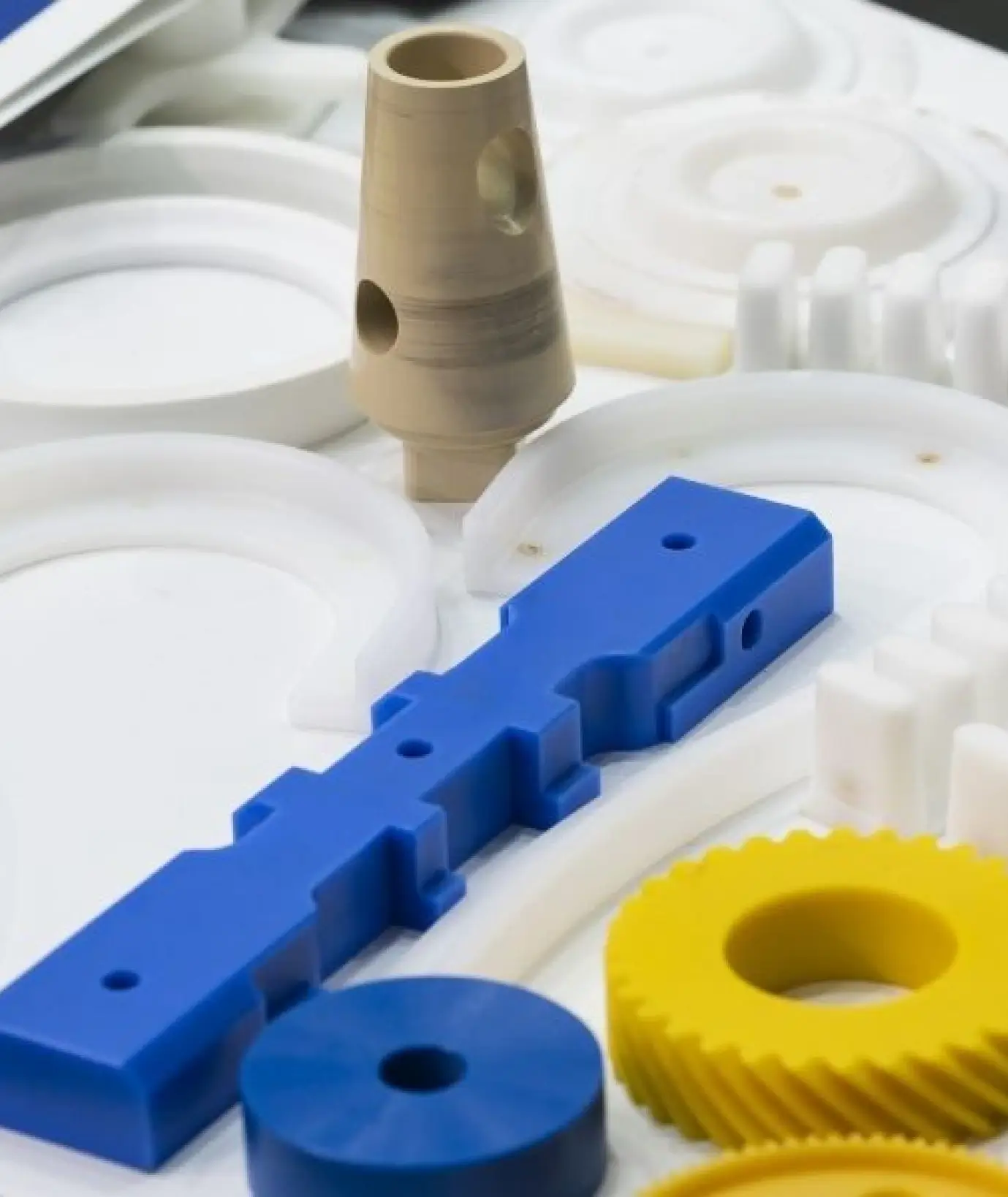
The custom CNC Plastic machining parts can be finished using different techniques to achieve specific surface properties and appearance. At ProleanTech, we have various surface finishing options, tailored to your needs.
As Machined:
The as-machined finish retains the machining marks, but it can be enough where the aesthetic is not required or finish quality does affect the functionality and performance. It is quick and cost-effective.
Bead Blast:
Glass or other less aggressive beads are suitable for plastic machining parts. It removes the imperfections and makes a uniform surface texture by removing a thin material layer.
Painting:
The good adhesive nature of plastic easily accepts the layer of paint to the surface of the plastic part, either for aesthetic reasons or to add protective coatings—glossy and protection against UV light, chemicals, and wear.
Brushing:
The abrasive brush rotates and removes the imperfection and burrs to create a uniform texture, providing a satin-like appearance.
CNC Plastic Applications
Automotive
Plastic machining in automotive is used for lightweight and corrosion-resistant complex and precise plastic components, which enhance fuel efficiency and durability. Examples; door handles, interior parts, bumpers, dashboard, fender liners, and lighting components.
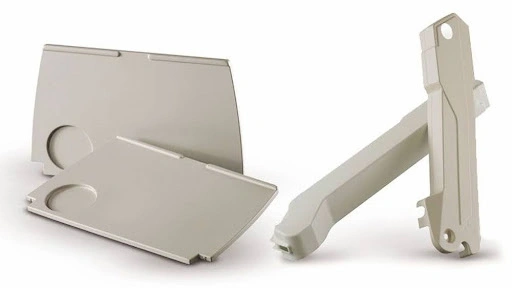
Aerospace
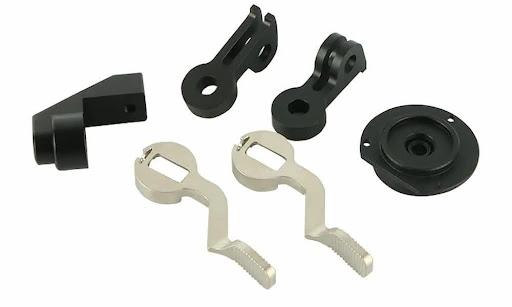
The high strength-to-weight ratio and thermal stability of plastics ensure reliable, lightweight components for aerospace applications like electrical insulation parts, control knobs, and levers, aircraft windows, panels, bearings, seals, etc.
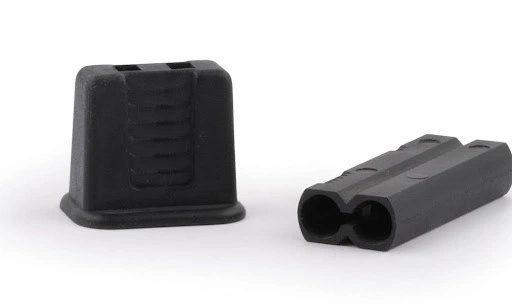
Defense
Plastic’s strength, durability, impact resistance, and lightweight can be converted into precise functional parts with exact specifications for defense equipment and navigation systems using CNC machining, such as armor parts, UAV parts, communication device housings, and radar systems.

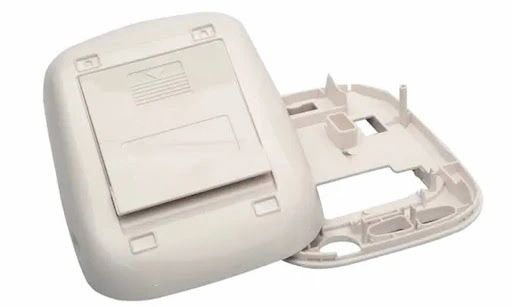
Electronics
The electrical insulation, strength, and lightweight of plastics make them perfect for various detailed electronic components and enclosures, such as circuit board elements, connectors, sockets, insulation barriers, mounting brackets, LCD screens, etc.
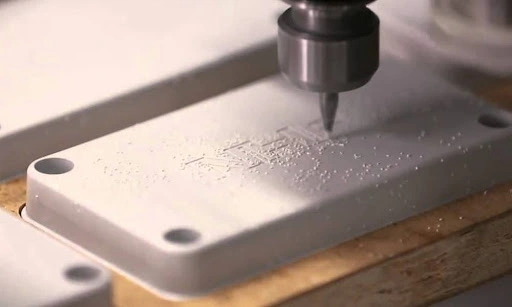
Medical
Biocompatible and sterilizable plastics allow precise, custom medical devices and implants tailored to patient needs.
General Applications
Plastic machining offers durability, precision, versatility, cost-effectiveness, and precision, suitable for a wide range of industrial and consumer products; kitchen tools, industrial parts, toys, and low-friction strips for conveyors.
CNC Plastic Parts Gallery
Plastic Machining FAQs
What is Plastic Machining?
Can plastic parts be machined to tight tolerances?
What are the benefits of using plastic over metal in machining?
● Corrosion Resistance: Many plastics are highly resistant to chemicals and corrosion.
● Cost-Effective: Plastic materials are often cheaper and easier to process than metals.
● Electrical Insulation: Plastics typically have good electrical insulating properties.
How does plastic machining compare to plastic injection molding?
● Tooling Costs: Machining has lower initial tooling costs compared to injection molding.
● Flexibility: Machining offers more flexibility in design changes and prototyping.
How do I choose the right plastic material for my project?
● Mechanical properties (strength, flexibility)
● Thermal properties (heat resistance)
● Chemical resistance
● Electrical properties
● Cost
● Application requirements
Consulting with a knowledgeable plastic machining provider can help you make the best material choice for your project.
⁕ If you have any other question, feel free to reach out to us for help. Get in touch with our engineer to discover more about plastic machining!
Explore More Services
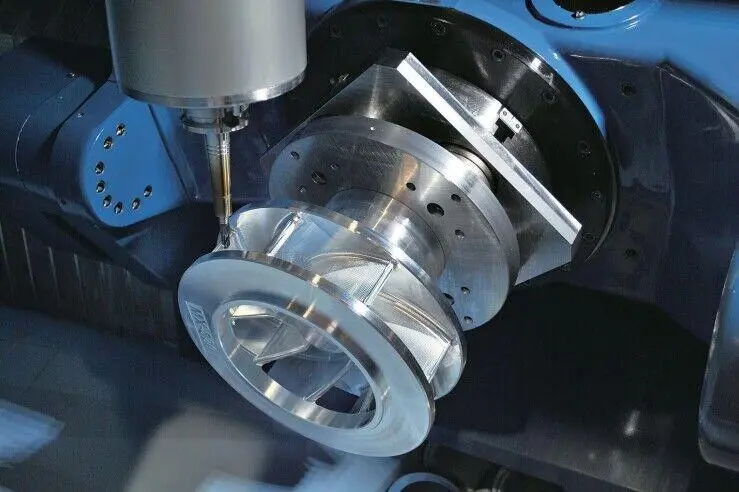
CNC Machining
Online CNC Machining Service for custom parts. Low-cost and rapid prototyping for your projects.
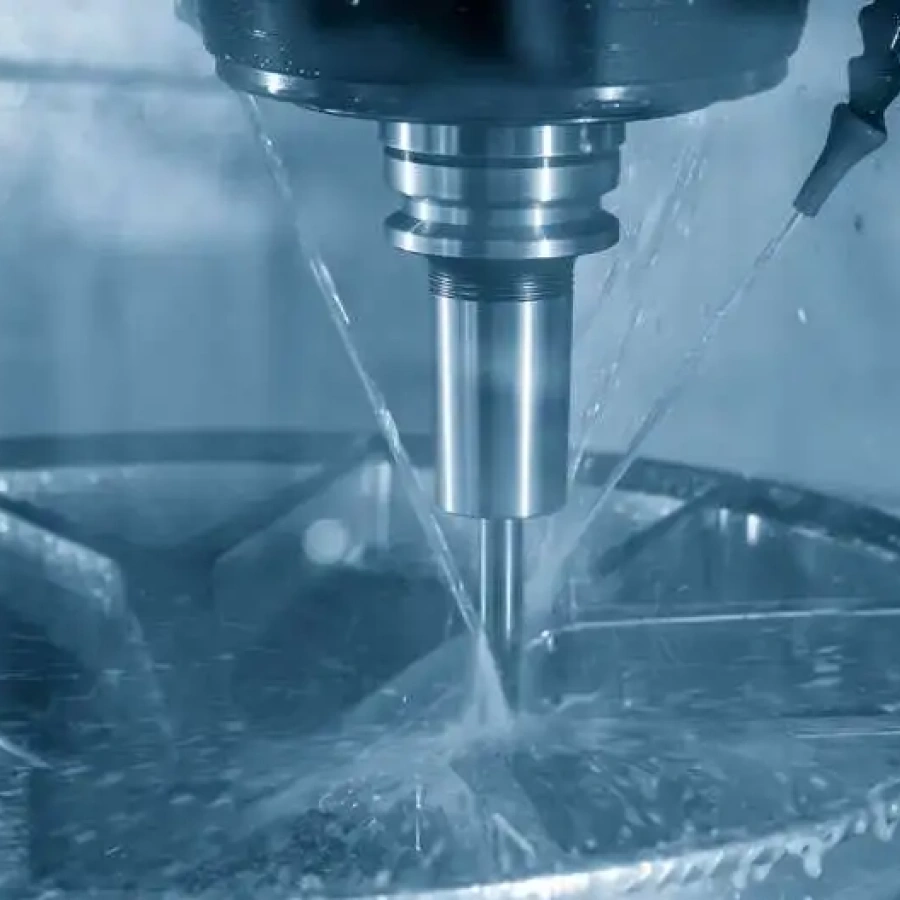
CNC Milling
Custom Online CNC milling service with 3-axis & 5-axis milling center creating complex geometries.
CNC Turning
Highly experienced CNC-turning prototype & batch production. Budget-friendly turning solutions.
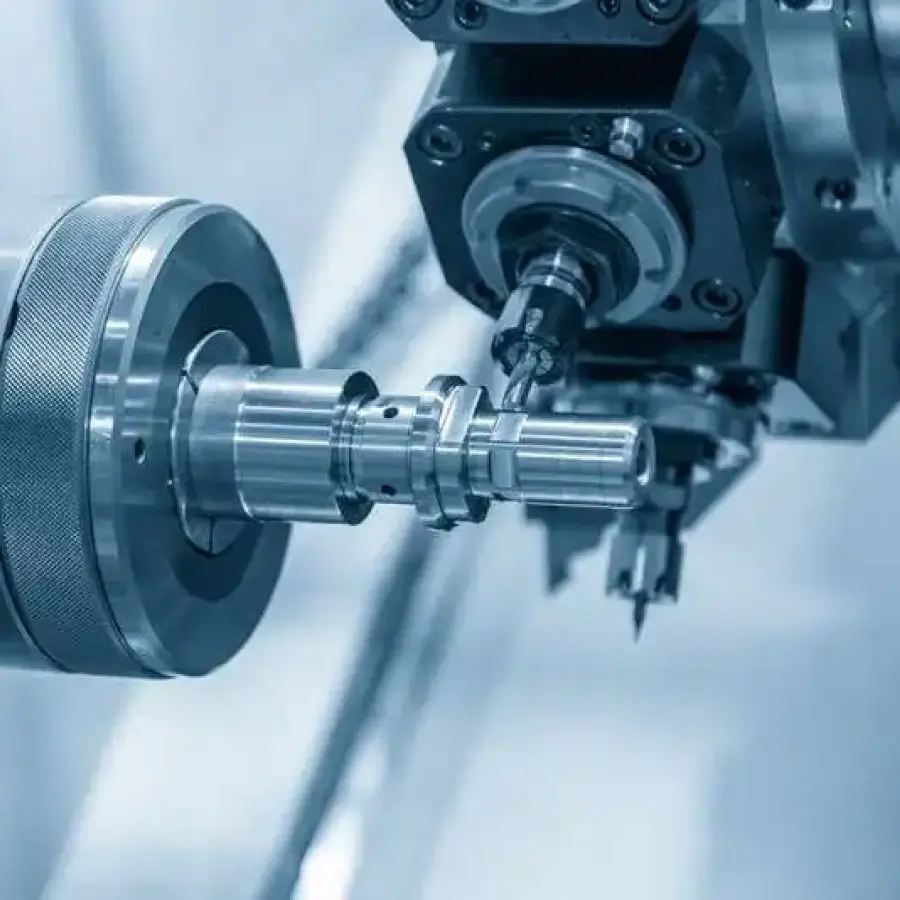
CNC Turning Milling
CNC Turning Milling Service perfect for high-precision parts with complex geometries.
Injection Molding
Injection molding service covers mold making, injection molding, over-molding, and insert molding.
Latest Blog
Check out our latest blogs, we share industry trends, design tips, and experience earned from manufacturing.
- Electroplating Vs Electro-less plating
- What are the types of surface finishes for CNC machining?
- Common Materials for CNC Machining
- Tolerances in CNC Machining
- Sheet Metal Fabrication: Enclosures for Electronics
- Best Cutting Tools for CNC Machining– Choose the Right
- An Ultimate Guide to CNC Copper Machining
- Production Cycle Time in CNC Machining
- Electroplating Vs Electro-less plating
- What are the types of surface finishes for CNC machining?
- Common Materials for CNC Machining
- Tolerances in CNC Machining
- Sheet Metal Fabrication: Enclosures for Electronics
- Best Cutting Tools for CNC Machining– Choose the Right
- An Ultimate Guide to CNC Copper Machining
- Production Cycle Time in CNC Machining

Die Cast Industry: Status in 2026 and Trends by Segments
Die-casting is a process of creating metal components by forcing molten material into a reusable mold (called a die), where it fills the cavity and takes the shape upon solidification.
Read more →
Electric Discharge Machining Applications Across Industries
Electrical Discharge Machining (EDM) is a non-conventional subtractive manufacturing process, in which a tool (electrode/wire) removes the material from conductive workpieces using controlled electric sparks inside a dielectric medium
Read more →
PEI CNC Machining: Material Grades, Processes, and Considerations
PEI CNC machining converts raw PEI rod, bar, or plate into functional components using cutting, milling, turning, drilling, and other suitable operations using the CAD model & CNC program.
Read more →PLASTIC MACHINING REVIEW
Account for material movement when defining a machined plastic part
Plastic machining must consider polymer grade, moisture/thermal condition, wall stiffness, clamping load and the measurement environment. Define the functional dimensions, reference temperature or conditioning requirement where relevant, and avoid transferring metal assumptions without review.
Engineering data to lock before release
| Polymer identity | Grade, fill state and stock form |
|---|---|
| Stability condition | Conditioning, temperature and moisture sensitivity |
| Geometry risk | Thin walls, long spans and stress concentration |
| Measurement context | Datum, instrument and environmental condition |
Published property values vary by grade and condition; the purchased material data sheet and approved drawing govern the part.
